The Maid Diaries (2025) is a glossy, emotionally sincere romantic comedy that wears its fairy-tale DNA proudly while gently updating it for a modern audience. Beneath the polished mansions and holiday lights lies a story about dignity, class, and the quiet power of being truly seen. It may follow familiar rom-com footsteps, but it does so with charm, confidence, and surprising warmth.
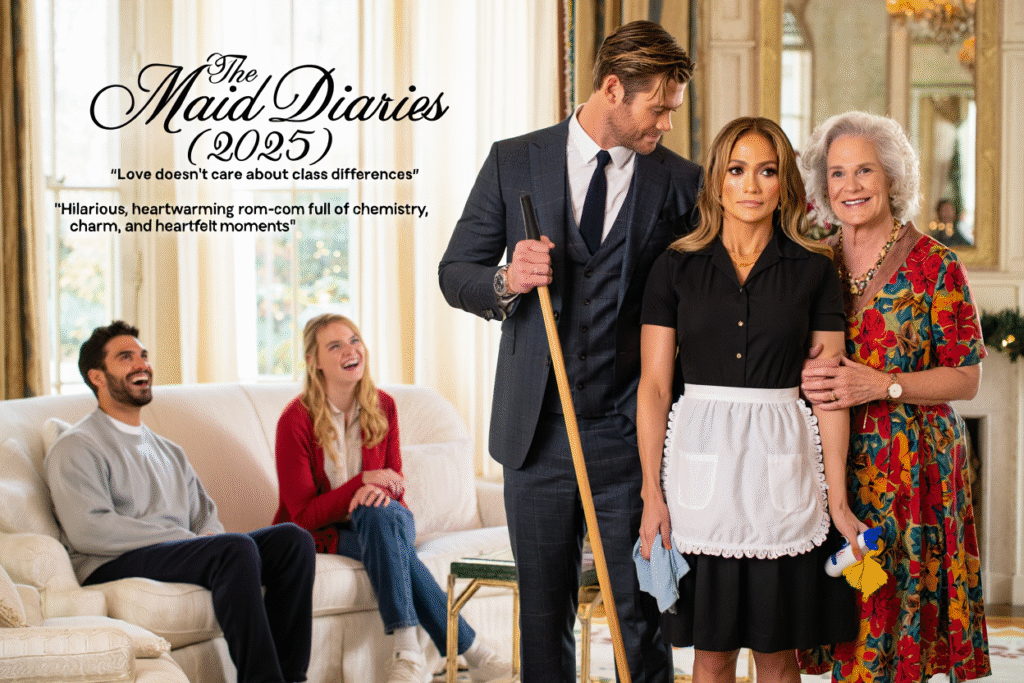
Jennifer Lopez anchors the film with effortless grace as Maria, a woman whose strength is expressed not through grand speeches, but through routine, resilience, and restraint. Lopez brings depth to a character that could have easily been reduced to a cliché. Her Maria is observant, guarded, and quietly hopeful—a woman who has learned how to survive without expecting miracles.
Chris Hemsworth plays Jack with a self-aware blend of charm and oblivious privilege. He’s not cruel or arrogant, just emotionally insulated by wealth and habit. Hemsworth leans into the role’s comedic potential, allowing Jack’s cluelessness to feel human rather than frustrating, especially as he slowly begins to recognize the emotional vacuum in his own life.
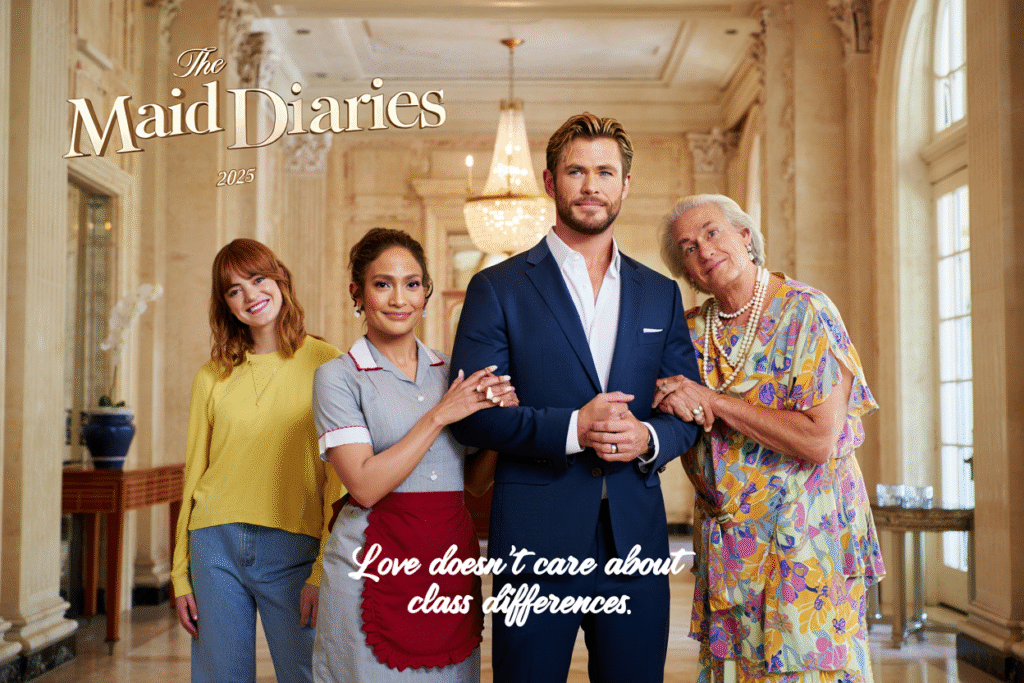
What truly sells the romance is the chemistry between Lopez and Hemsworth. Their interactions are built on small moments—shared glances, awkward conversations, accidental honesty—rather than sweeping declarations. The film understands that attraction often grows in silence, in spaces where two people drop their masks without realizing it.
Emma Stone provides sharp, scene-stealing energy as Maria’s best friend, acting as both comic relief and emotional translator. Her character vocalizes the thoughts Maria keeps buried, offering humor that cuts through sentimentality while still protecting the film’s heart. Stone’s timing and delivery elevate even the simplest dialogue.
John Cena, cast brilliantly against type as Maria’s wise grandmother, adds unexpected tenderness. His presence brings warmth and grounding humor, delivering advice that feels earned rather than preachy. Cena proves once again that sincerity, when played straight, can be just as powerful as a punchline.
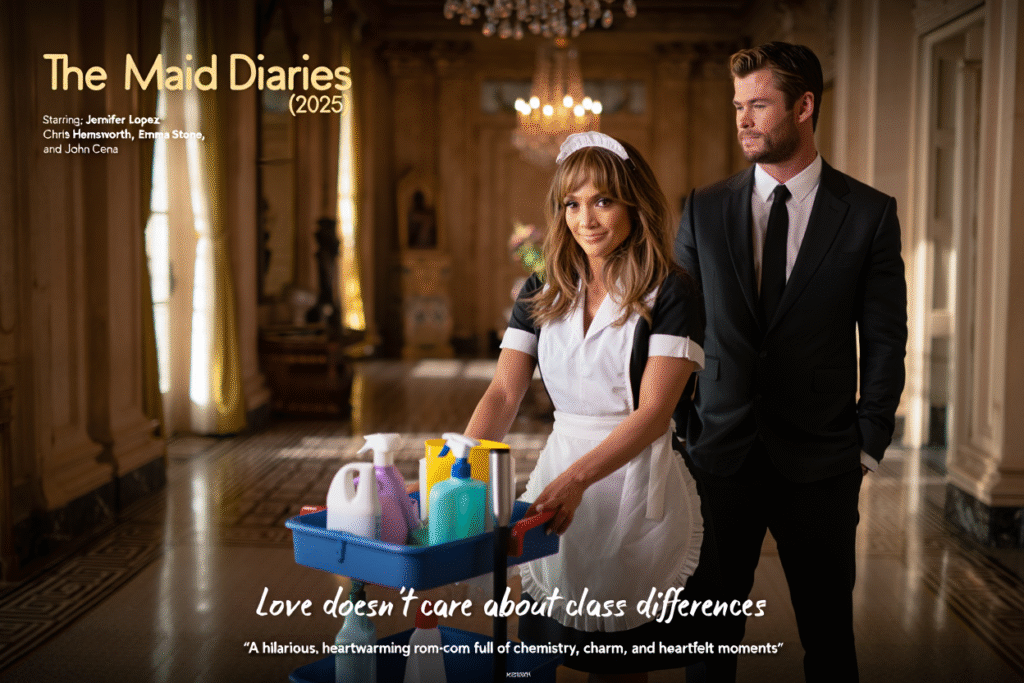
Class difference is the film’s central tension, but The Maid Diaries handles it with a light yet respectful touch. It doesn’t pretend inequality doesn’t exist, nor does it glamorize poverty. Instead, it frames love as something that exposes imbalance—and forces characters to confront their assumptions.
The holiday setting works as more than decoration. Christmas becomes a metaphor for emotional vulnerability, a time when facades crack and loneliness becomes harder to ignore. The twinkling lights and festive chaos contrast beautifully with Maria’s internal stillness and Jack’s emotional confusion.
Tonally, the film balances humor and sincerity with confidence. The misunderstandings never feel cruel, and the emotional beats are allowed to breathe. When conflicts arise, they stem from fear and miscommunication rather than forced drama, making the resolution feel earned.
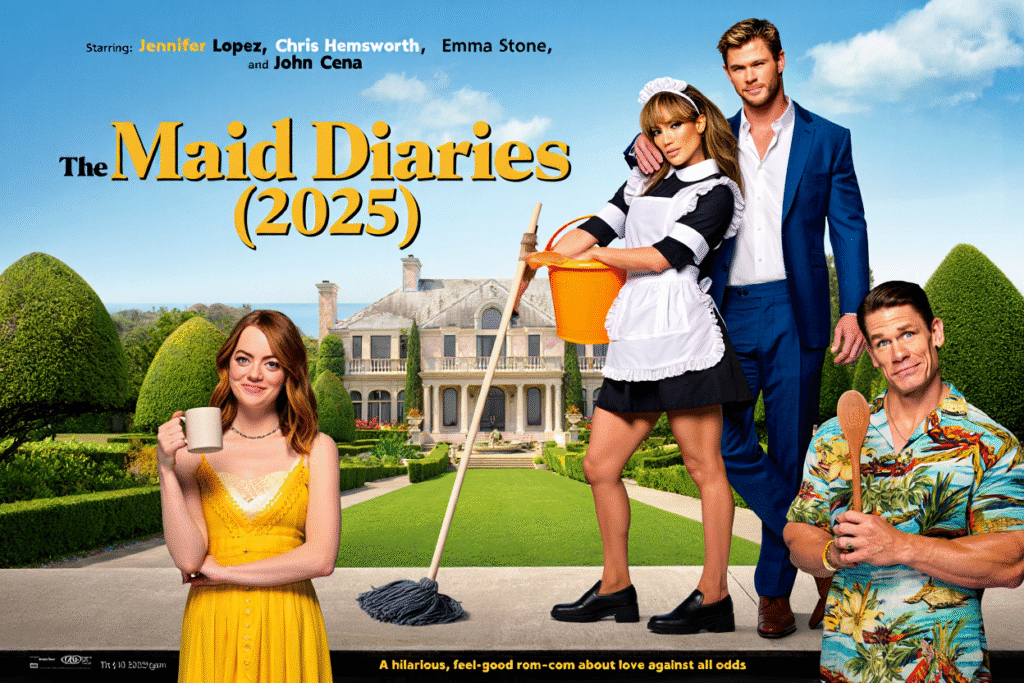
Visually, the movie embraces rom-com comfort—warm lighting, elegant interiors, cozy domestic spaces—but it uses them to highlight contrast. Maria’s quiet presence within opulence subtly reinforces the film’s central question: who truly belongs in these spaces, and why?
In the end, The Maid Diaries (2025) is not just about falling in love—it’s about being recognized. It reminds us that romance isn’t about rescue, wealth, or fantasy, but about attention, respect, and emotional courage. Sweet, funny, and gently empowering, it’s a modern fairy tale that knows exactly why these stories still matter.

GIPHY App Key not set. Please check settings