The Great War Between Ghosts and Bikers (2025) is the kind of movie that shouldn’t work on paper—but absolutely thrives on screen. Blending supernatural chaos with greasy, leather-clad rebellion, this horror-comedy leans fully into its absurd premise and comes out the other side roaring, laughing, and howling with anarchic energy. It’s loud, ridiculous, and surprisingly clever in the way it understands its own madness.
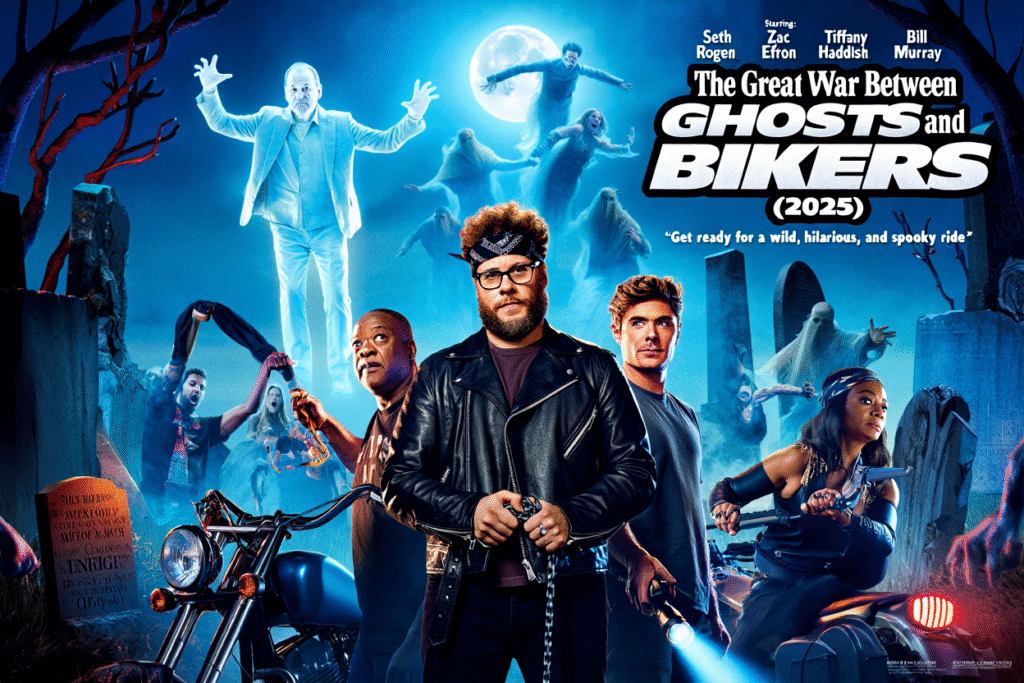
At the center of the mayhem is Seth Rogen’s Rick “Thunder” Thompson, a biker leader whose confidence far outweighs his competence. Rogen plays him with his signature slacker bravado, turning disbelief into comedy gold as Rick repeatedly insists ghosts “aren’t real” while actively being chased by them. His performance grounds the insanity with a strangely relatable disbelief in the impossible.
Zac Efron’s Benny provides the perfect counterbalance. Cooler, sharper, and just reckless enough, Benny is the type who taunts ghosts not because he’s fearless, but because he thinks it’s funny. Efron clearly enjoys subverting his heroic image, and his chemistry with Rogen fuels much of the film’s comedic momentum.
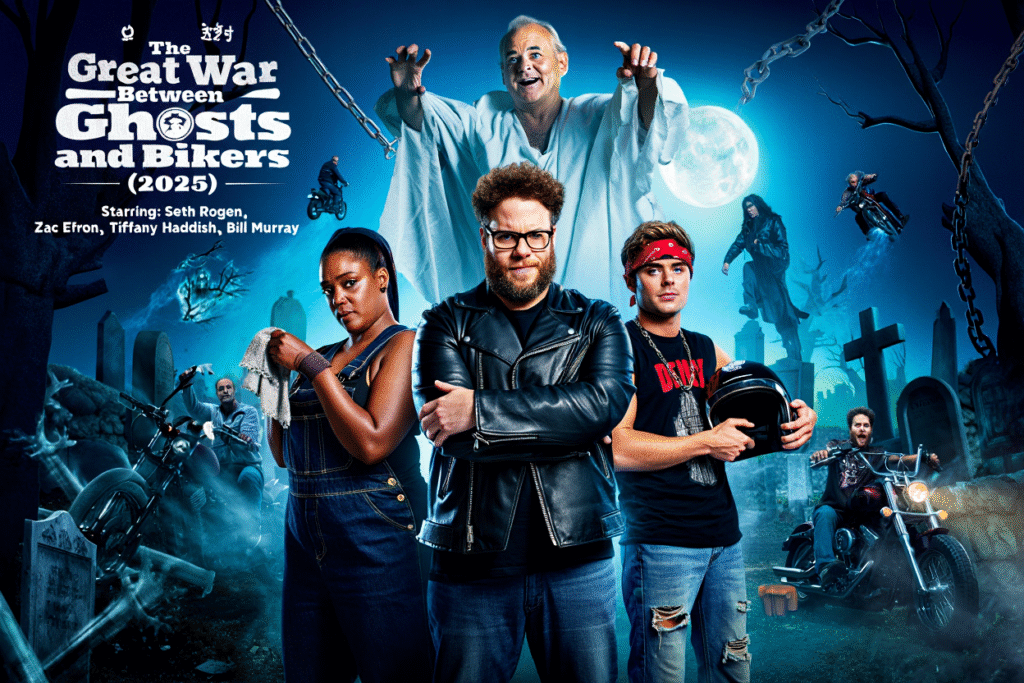
Tiffany Haddish is an undeniable standout as Denise, the foul-mouthed, hyper-competent mechanic who becomes the gang’s de facto strategist. She brings authority, bite, and relentless humor, often stealing scenes with one-liners that land like punches. Denise isn’t just comic relief—she’s the emotional engine that keeps the bikers from completely falling apart.
Then there’s Bill Murray, whose ghost commander is pure inspired casting. Wry, exhausted, and eternally unimpressed, his spectral leader treats the ghost war like a bureaucratic nightmare he never asked for. Murray’s deadpan delivery adds a layer of ironic detachment that elevates the film from simple slapstick to something more self-aware and oddly charming.
Visually, the film embraces chaos. Haunted motorcycles blaze across highways, chains fly through the air without owners, and glowing specters clash with roaring engines in set pieces that feel like heavy metal album covers brought to life. The CGI isn’t always subtle, but it doesn’t need to be—excess is part of the joke.

What makes the film work is its refusal to take sides. Neither the ghosts nor the bikers are portrayed as purely right or wrong. Both are territorial, stubborn, and driven by pride. The conflict becomes less about good versus evil and more about two groups who refuse to let go of their pasts—literally in the ghosts’ case.
The humor walks a fine line between crude and clever, and for the most part, it succeeds. There are jokes rooted in physical comedy, sharp dialogue, and meta-awareness of horror tropes. When the film slows down, it’s usually to let a gag breathe or to set up an even bigger payoff.
Surprisingly, The Great War Between Ghosts and Bikers finds a strange heart beneath the noise. The eventual team-up between the living and the dead doesn’t feel forced; it feels earned through shared absurdity and mutual exhaustion. The message is simple but effective: sometimes peace only comes when everyone admits they’re being ridiculous.
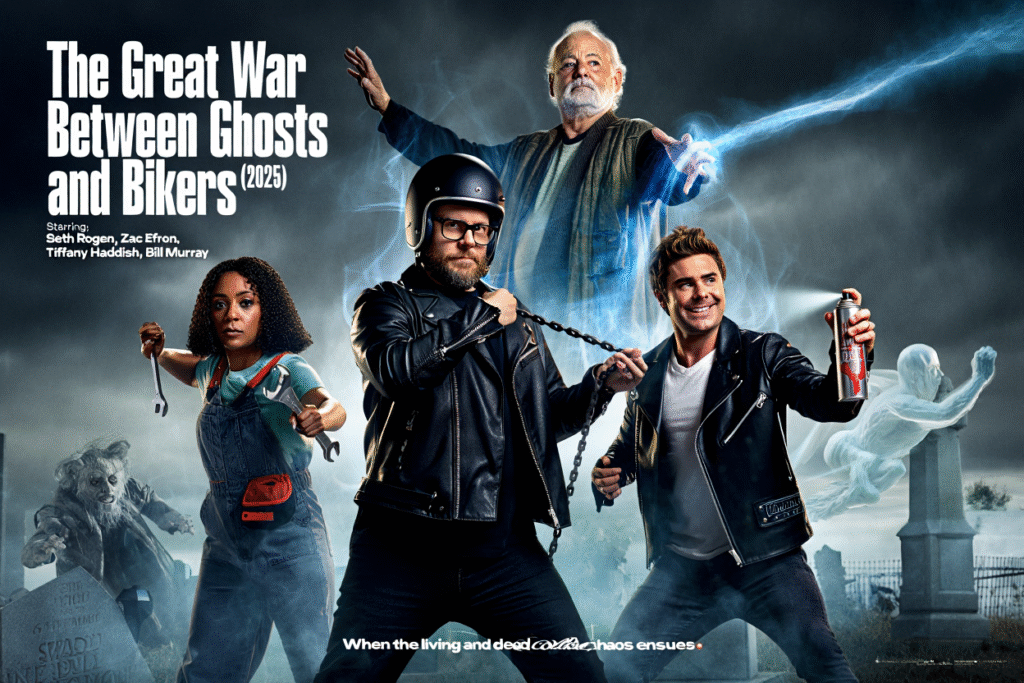
The pacing is relentless, rarely allowing the audience to catch its breath. While this can feel overwhelming at times, it suits the film’s manic personality. This is not a movie meant to be analyzed frame by frame—it’s meant to be experienced like a wild midnight ride.
In the end, The Great War Between Ghosts and Bikers (2025) is a gloriously unhinged genre mashup that knows exactly what it is. It’s loud, messy, and unapologetically stupid in the smartest way possible. If you’re willing to embrace the chaos, this supernatural biker brawl delivers laughs, spectacle, and a surprisingly spirited good time.

GIPHY App Key not set. Please check settings