Kevin Costner Presents: The First Christmas (2025) is not just a holiday TV special—it is a quiet, reverent reimagining of the nativity story through the dust, snow, and solitude of the American frontier. By relocating one of history’s most sacred narratives to the late 1800s West, Costner creates something both familiar and strikingly new, proving that the spirit of Christmas transcends time, geography, and tradition.
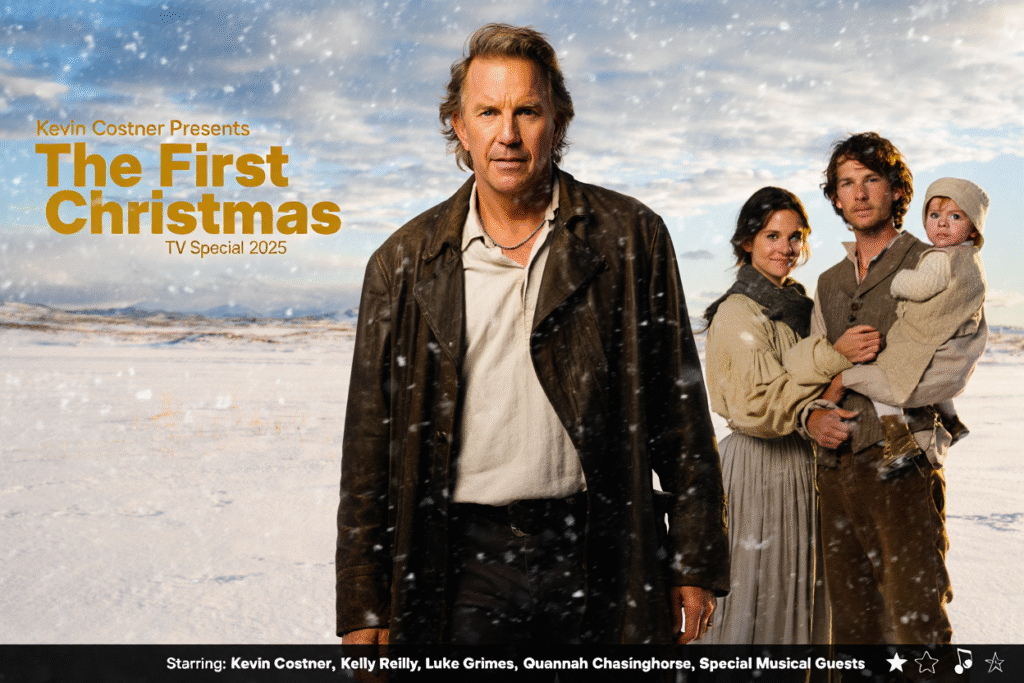
Kevin Costner stars as a lone wanderer shaped by loss, hardship, and years of survival in an unforgiving land. His performance is restrained and deeply human, built on silence rather than speeches. This is a man who has learned to trust no one, and it is precisely that emotional distance that makes his transformation so powerful as the story unfolds.
Kelly Reilly and Luke Grimes deliver soulful, grounded performances as a weary couple traveling through a brutal winter storm. Their journey mirrors that of Mary and Joseph without direct imitation, allowing the symbolism to emerge naturally. Their quiet faith is never preached, only lived—through endurance, trust, and an unspoken belief that their child carries a purpose greater than survival.
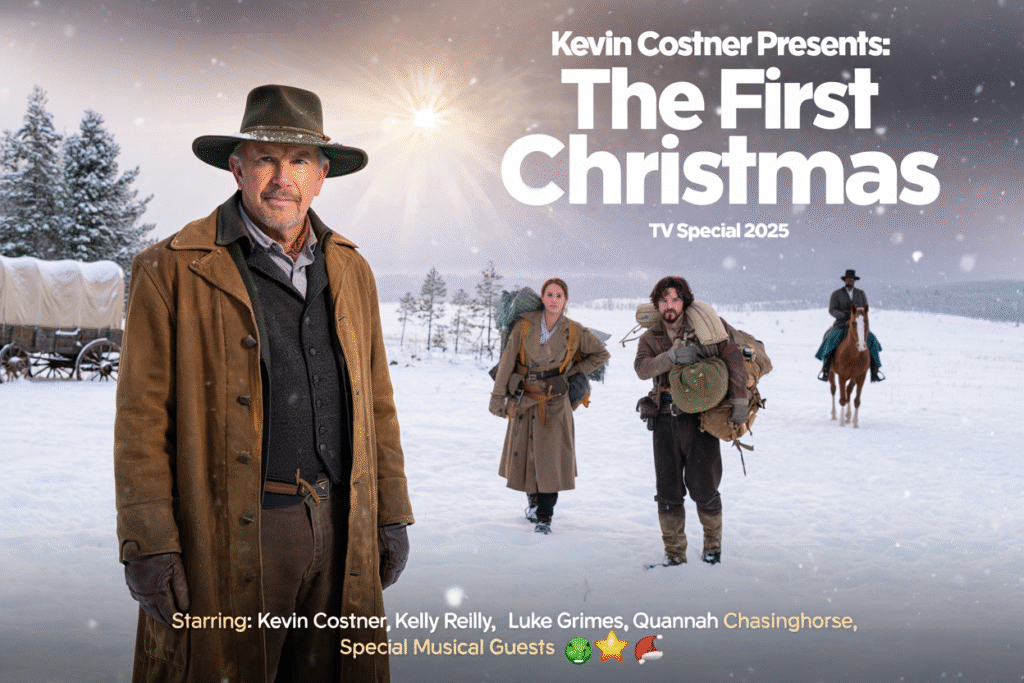
The American frontier setting is more than a backdrop; it becomes a character in its own right. Snow-covered plains, wind-swept valleys, and candle-lit cabins replace deserts and stables, yet the emotional weight remains unchanged. The wilderness reflects the inner desolation of the wanderer and the fragile hope carried by the couple.
As danger looms in the form of outlaws, hunger, and the relentless cold, the story slowly shifts from survival to redemption. Costner’s wanderer does not set out to be a protector—he becomes one through proximity, compassion, and a growing sense that this journey is not accidental. His arc is subtle but deeply moving.
One of the special’s greatest strengths is its pacing. The First Christmas allows moments to breathe, trusting silence, snowfall, and shared glances to carry meaning. In a holiday landscape often filled with noise and spectacle, this restraint feels almost radical—and profoundly effective.
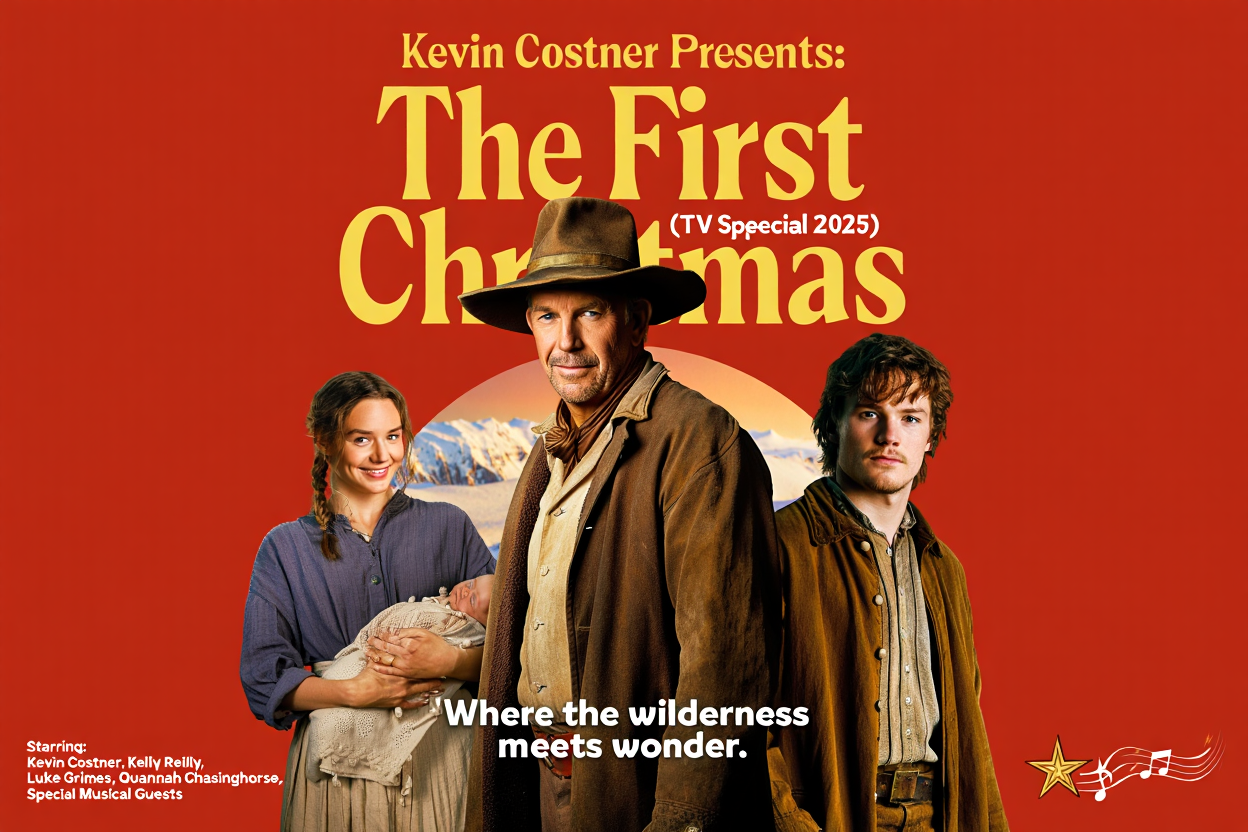
The musical sequences elevate the experience without overwhelming it. Rather than traditional carols, the music blends frontier folk tones with spiritual melodies, reinforcing the sense that this is an old story retold through a different cultural lens. Each musical moment feels earned, emotional, and rooted in the narrative.
Quannah Chasinghorse’s presence adds an important layer of spiritual depth, connecting the story to Indigenous perspectives of land, signs, and sacred destiny. Her role subtly reinforces the idea that divine moments are recognized differently across cultures, yet felt universally.
The climactic Christmas Eve sequence is quietly breathtaking. A guiding light, not unlike the Star of Bethlehem, emerges against the vast darkness of the frontier, drawing fractured people together. Former enemies pause, weapons lower, and something rare happens—peace, not through force, but through shared awe.
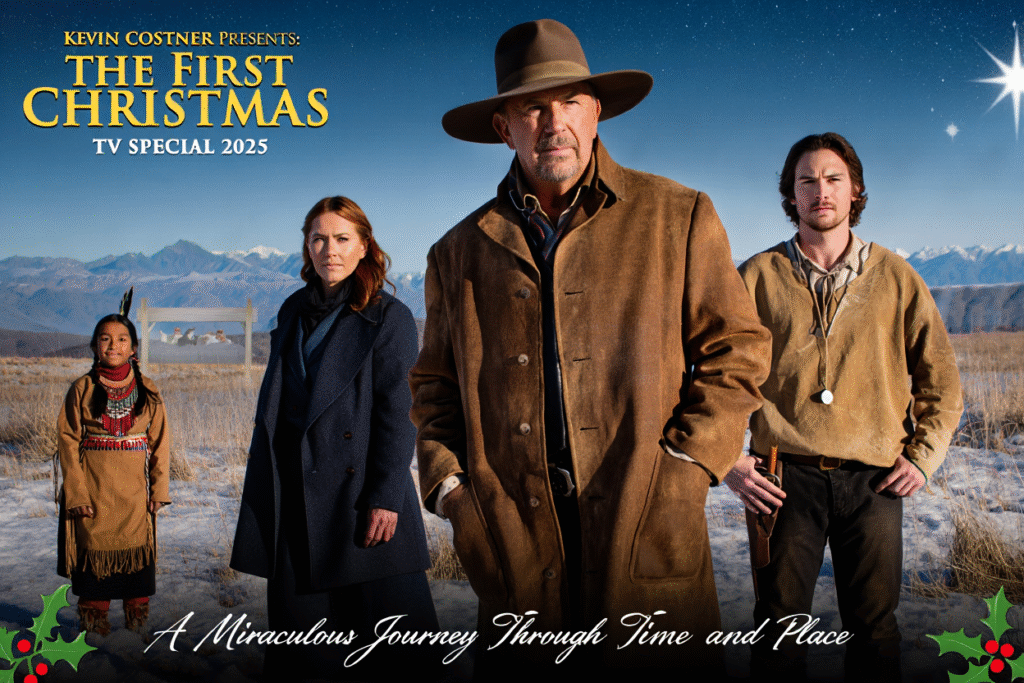
What makes The First Christmas resonate is its refusal to modernize the message while still making it accessible. It does not dilute faith, nor does it demand belief. Instead, it invites reflection—on kindness, protection, and the quiet miracles born when people choose compassion over fear.
In the end, Kevin Costner Presents: The First Christmas (2025) is a solemn, beautifully crafted reminder that every generation retells Christmas in its own language. Whether in Bethlehem or the frozen frontier, the story remains the same: hope is born in the harshest places, and even the most hardened hearts can still be part of something holy.

GIPHY App Key not set. Please check settings