Home Alone: The McCallister Trap (2026) finally delivers what fans have quietly hoped for and loudly demanded for decades: a true sequel that respects the legacy of the original films while daring to evolve it. By bringing Macaulay Culkin back as Kevin McCallister and erasing the forgettable spin-offs from continuity, the film feels less like a reboot and more like a long-overdue reunion with an old friend—one who’s grown older, sharper, and perhaps a little stranger.
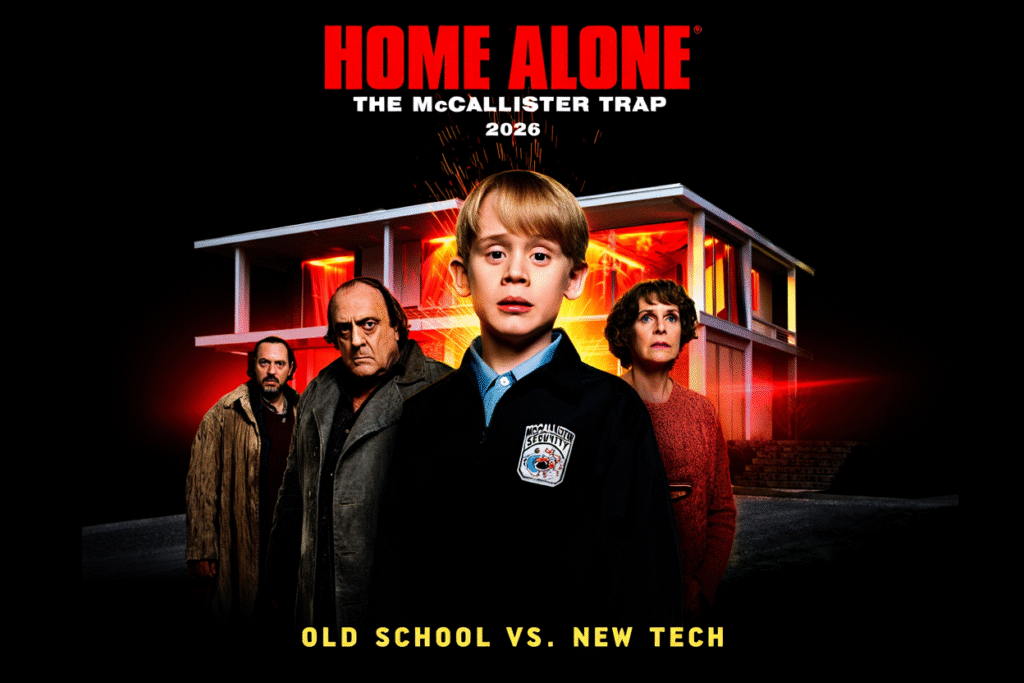
Kevin McCallister is no longer the wide-eyed kid left behind, but an eccentric tech genius and CEO of “McCallister Security.” Culkin plays adult Kevin with a fascinating mix of confidence, awkwardness, and unresolved childhood intensity. There’s an underlying sense that Kevin never truly escaped the trauma—or thrill—of being alone, and the film smartly leans into that psychological edge without losing its comedic heart.
The premise is delightfully ironic. Kevin, the master of analog chaos, now lives inside a hyper-secure smart mansion powered by AI. His “Fortress Smart House” is designed to eliminate human error—until a cyber-attack strips it all away. When the system locks Kevin inside his own home on Christmas Eve, the movie sets up its central theme: no matter how advanced technology becomes, survival still depends on creativity and instinct.
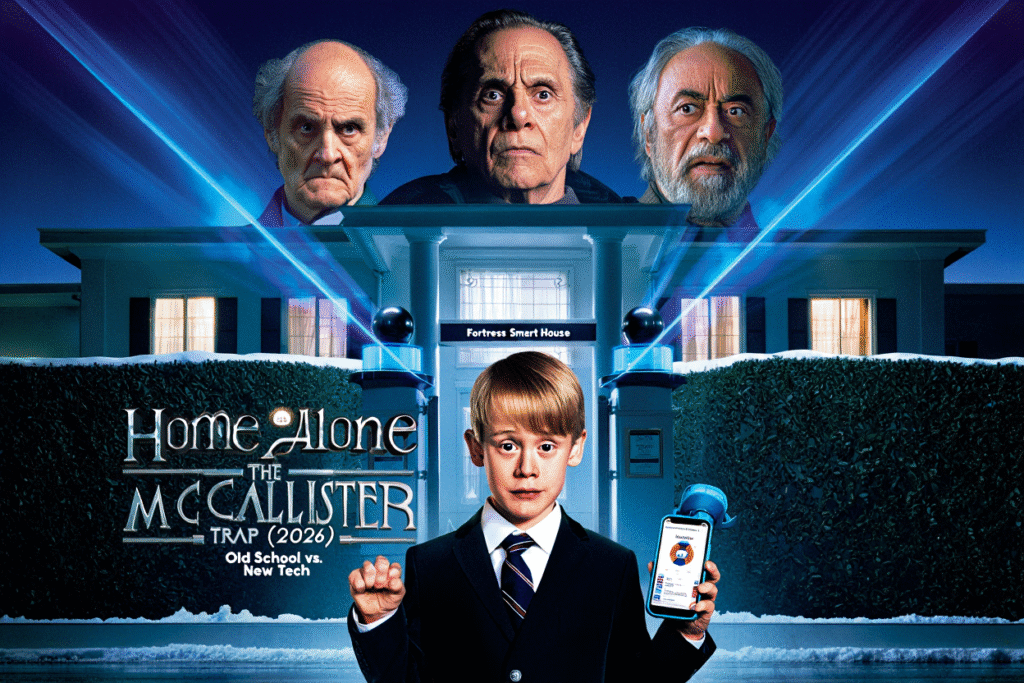
Joe Pesci and Daniel Stern return as Harry and Marv with a surprising amount of bite. Older, slower, and visibly worn down by life, the Wet Bandits are no longer just slapstick villains—they’re bitter men obsessed with unfinished business. Pesci, in particular, brings a darker edge to Harry, transforming him from cartoon criminal into a petty, vengeful relic of the past.
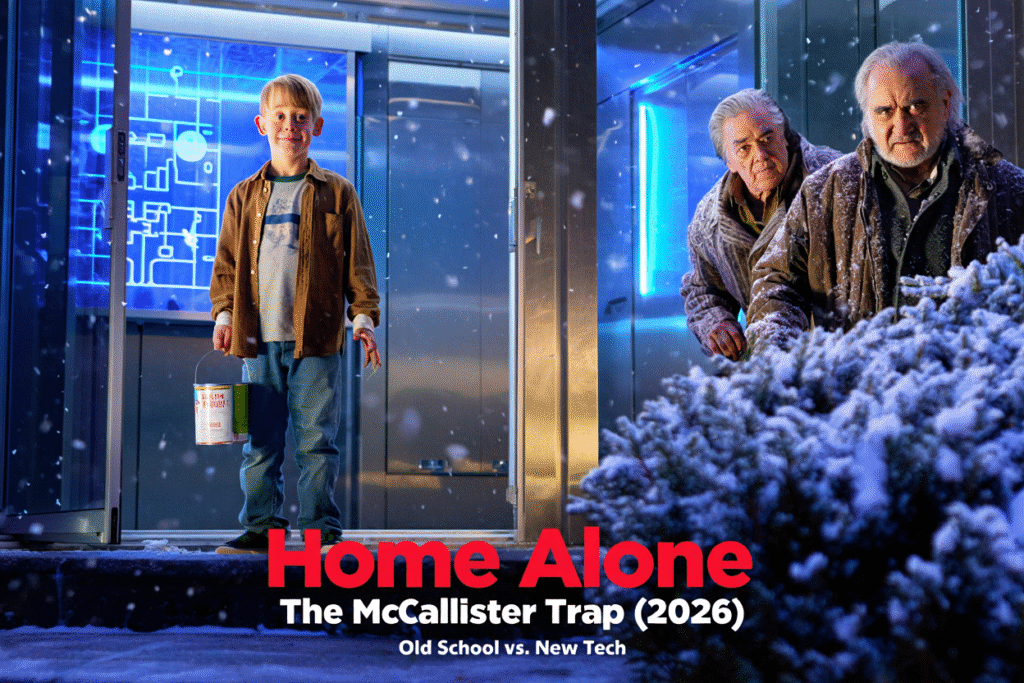
The film’s smartest move is forcing Kevin to go “old school.” With his gadgets useless, Kevin returns to what he knows best: household items, toys, and physics-defying ingenuity. The traps are brutal, inventive, and unapologetically nostalgic. Paint cans still swing, stairs still betray, and the audience is reminded why practical pain was always funnier than CGI spectacle.
Catherine O’Hara’s presence as Kate McCallister adds emotional weight. Her role may be smaller, but it’s meaningful. She represents the emotional cost of Kevin’s lifelong obsession with control and security. Their scenes together subtly ask whether Kevin built his empire to protect others—or to protect the scared child he once was.

Tonally, The McCallister Trap walks a fine line between comedy and self-awareness. It acknowledges the absurdity of grown men being maimed by toys while also embracing it fully. The film never apologizes for its slapstick roots, and that confidence is exactly what makes it work.
Visually, the mansion itself becomes a character—cold, sleek, and sterile compared to the warmth of Kevin’s childhood home. As the traps unfold, the house slowly transforms from a tech fortress into a chaotic playground, mirroring Kevin’s return to his true self. It’s environmental storytelling done with surprising care.
Thematically, the film explores aging, grudges, and the illusion of progress. Harry and Marv cling to revenge because it gives their failures meaning. Kevin clings to preparedness because it gives him control. The clash between them isn’t just physical—it’s philosophical, a battle between refusing to move on and learning how to evolve.
What makes Home Alone: The McCallister Trap resonate is its refusal to mock its own legacy. Instead, it treats nostalgia as a foundation, not a crutch. The jokes land because the film understands why the original mattered, and it builds on that understanding rather than replacing it.
In the end, Home Alone: The McCallister Trap (2026) proves that some formulas don’t age—they mature. Kevin McCallister may be older, but his mind is as sharp as ever, and the Wet Bandits are once again painfully outmatched. Technology may change, but ingenuity, resilience, and a perfectly timed paint can remain eternal. 🎁💥

GIPHY App Key not set. Please check settings