Falling for the Stepmom (2025) takes a premise that sounds like pure chaos and turns it into a surprisingly warm, self-aware romantic comedy that understands exactly how far it can push the joke without losing its heart. It’s bold, ridiculous, and far more sincere than it has any right to be, leaning into discomfort as a source of humor while carefully steering toward emotional truth.
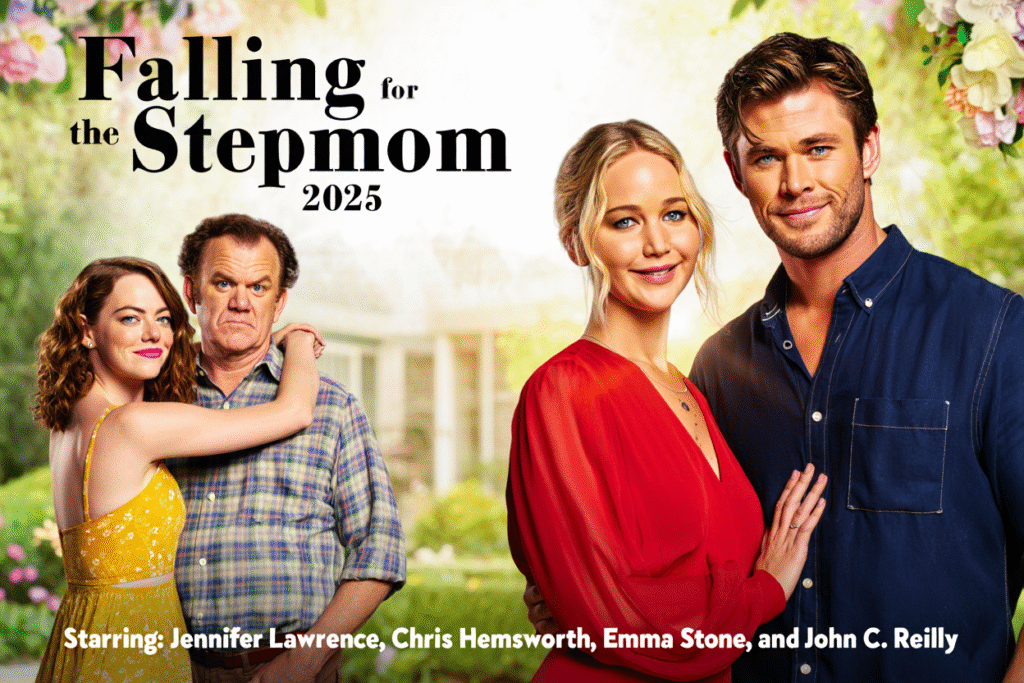
Chris Hemsworth plays Jake with effortless charm, presenting a man who looks like he has life figured out but is emotionally stuck in neutral. Hemsworth’s comedic timing shines here, especially in moments where Jake’s confidence collapses under the weight of his own terrible decisions. He makes Jake likable not because he’s right, but because he’s painfully human.
Jennifer Lawrence is the film’s secret weapon. As Claire, she avoids every stereotype the role could fall into, instead crafting a character who is witty, self-aware, and quietly vulnerable. Lawrence brings a grounded emotional intelligence to the film, ensuring that Claire never feels like a punchline. Her chemistry with Hemsworth crackles—not just romantically, but comedically, as both actors excel at awkward silence and sharp banter.
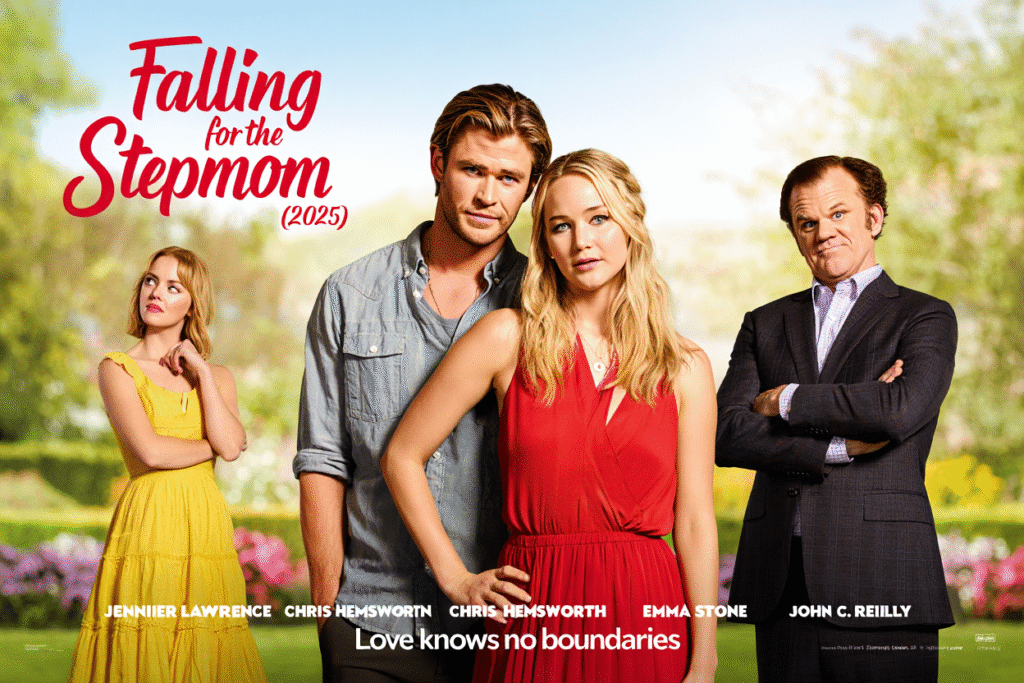
Emma Stone steals scenes as Claire’s brutally honest best friend, functioning as both comic relief and a voice of reason—albeit a deeply sarcastic one. Stone’s character delivers some of the film’s sharpest dialogue, often calling out the absurdity of the situation with a mix of affection and disbelief that mirrors the audience’s own reaction.
John C. Reilly adds a layer of emotional complexity as the best friend caught in the middle. Rather than playing him purely for laughs, the film allows his character moments of confusion, hurt, and reluctant acceptance. Reilly’s ability to blend humor with quiet sincerity gives the story unexpected weight.
What elevates Falling for the Stepmom is its refusal to treat the age gap and family dynamics as mere shock value. Instead, the screenplay mines those tensions for genuine conflict, asking uncomfortable but honest questions about boundaries, timing, and emotional readiness. The humor works because it acknowledges how messy real relationships can be.
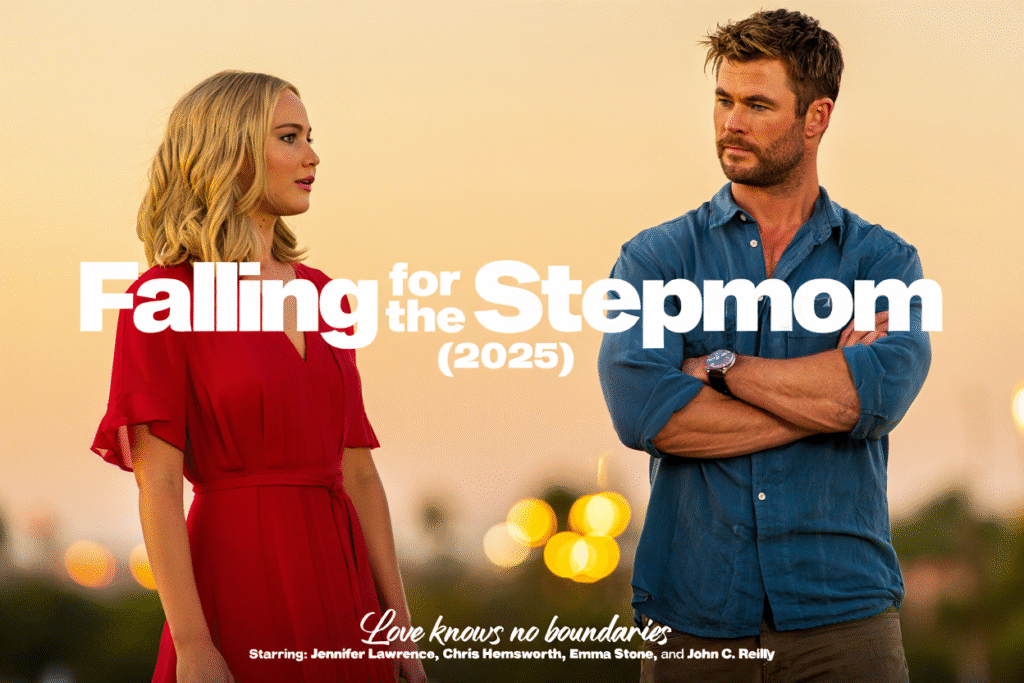
The film’s comedic set pieces—particularly the disastrous dinner party and a painfully awkward family vacation—are expertly staged, relying on character reactions rather than slapstick excess. These moments are funny because they feel earned, rooted in personality clashes rather than cheap gags.
Visually, the film embraces the clean, cozy aesthetic of modern studio rom-coms, but it uses that familiarity as a contrast to its unconventional story. The warmth of the settings reinforces the idea that love can grow in strange places, even when the circumstances feel wildly inappropriate.
The pacing is brisk, keeping the audience engaged while allowing emotional beats enough room to land. When the film slows down, it does so intentionally, giving its characters space to reflect rather than rushing toward an easy resolution.
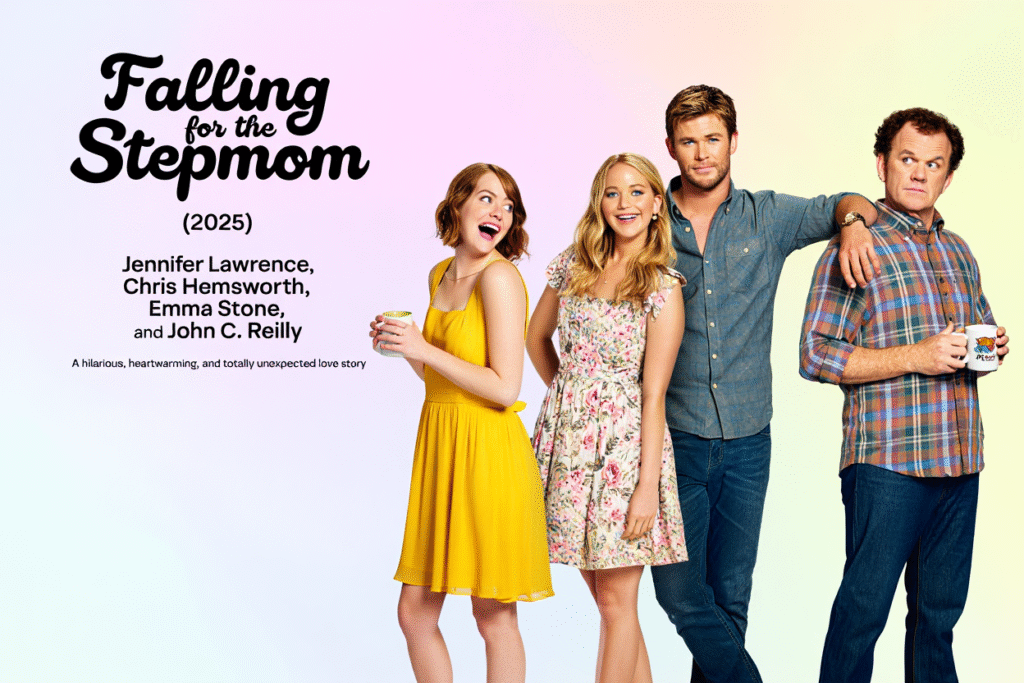
Most impressively, the movie never fully excuses its central dilemma. Instead of pretending love magically fixes everything, Falling for the Stepmom acknowledges consequences, difficult conversations, and emotional fallout. That honesty keeps the film from drifting into fantasy.
In the end, Falling for the Stepmom (2025) is a rom-com that dares to be uncomfortable, and that’s exactly why it works. It’s funny, charming, and unexpectedly thoughtful—a reminder that love stories don’t have to be neat to be meaningful, and sometimes the most awkward beginnings lead to the most sincere connections.
GIPHY App Key not set. Please check settings