There are films that define a generation — and then there are those that return decades later, not to repeat their past, but to reckon with it. Boyz n the Hood 2 (2025) stands as both a continuation and a reflection, a haunting echo of the original’s message filtered through the eyes of men who’ve lived long enough to understand the weight of surviving.
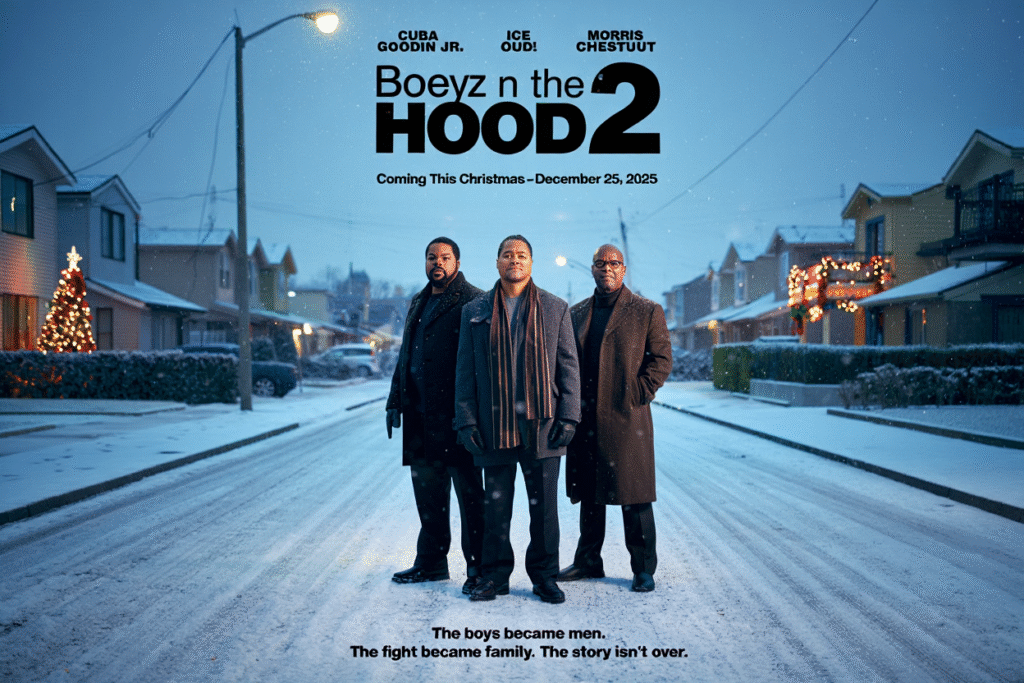
Set against a rare Los Angeles Christmas — snow falling like forgiveness over the cracked streets of South Central — the sequel reunites Cuba Gooding Jr. and Ice Cube in roles that have grown more introspective, more fragile, and yet more powerful with age. Tre is no longer the wide-eyed kid who dreamed of escaping the hood; he’s a father now, trying to guide his own son through a maze of choices that look all too familiar. Doughboy, weathered but wiser, carries the scars of every friend he’s buried — still rough around the edges, but learning that silence can sometimes speak louder than rage.
The ghost of Ricky — forever frozen in the hearts of viewers from 1991 — lingers over every frame. His legacy lives on through his son, a young athlete whose talent mirrors his father’s, and whose choices may decide the fate of everyone around him. Morris Chestnut’s quiet return as Ricky in memory sequences adds emotional gravity — brief, but unforgettable, reminding us that some stories never stop echoing.

Director Malcolm D. Lee, working in homage to the late John Singleton, understands that Boyz n the Hood was never just a story about violence; it was about vulnerability, about what it means to love something that might never love you back — your home, your people, your future. The sequel honors that vision while expanding it, showing how the same streets that once swallowed dreams can, under the right light, nurture redemption.
The film’s most striking quality is its maturity. Gone is the youthful defiance — in its place stands quiet reflection. These men are no longer trying to outrun their pain; they’re trying to make peace with it. The dialogue cuts deep, especially in the scenes between Tre and Doughboy, where forgiveness becomes a form of rebellion. “We survived,” Tre says, “but what did we do with that survival?” It’s the kind of line that sticks in your throat long after the credits roll.
Christmas, in this world, isn’t just a season — it’s a symbol. The snow that drifts across the opening scene feels almost mythic, a purity the city’s never seen, covering gunfire scars and fading murals in white. Beneath the twinkle lights and carols lies a truth that Singleton always understood: redemption doesn’t erase pain, but it can transform it.
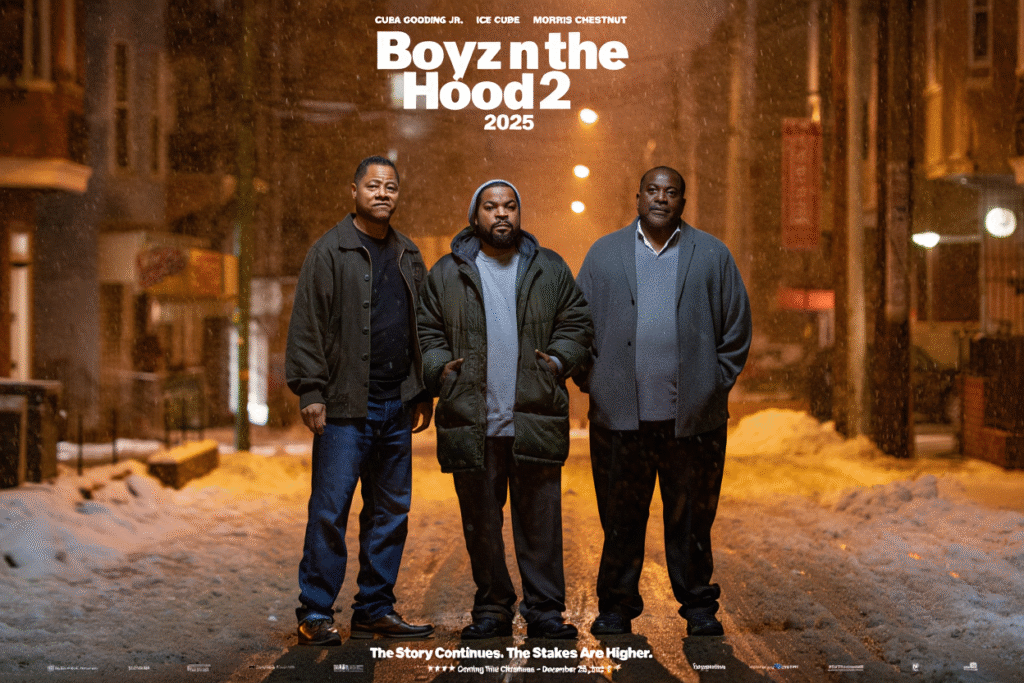
Cuba Gooding Jr. delivers a performance of quiet devastation — a man haunted not by what he’s lost, but by what he’s still responsible for. Ice Cube’s Doughboy, older but unbroken, becomes the soul of the film — a living testament to endurance, his every word a mix of regret and wisdom. Together, they bring a lived-in authenticity that no script could fake.
The film’s second act is where the emotional stakes hit hardest: a local shooting rocks the neighborhood, drawing the two friends back into the chaos they thought they’d escaped. But instead of responding with violence, they turn inward — toward mentorship, toward healing. Their mission isn’t revenge this time. It’s survival of the soul.
Cinematographer Bradford Young bathes South Central in golden dusk and wintry blue, transforming familiar streets into hallowed ground. The blend of grit and grace, of realism and quiet poetry, makes every frame ache with memory. The score, laced with gospel undertones and West Coast melancholy, bridges the past and present with elegance — echoing Singleton’s spirit without imitation.
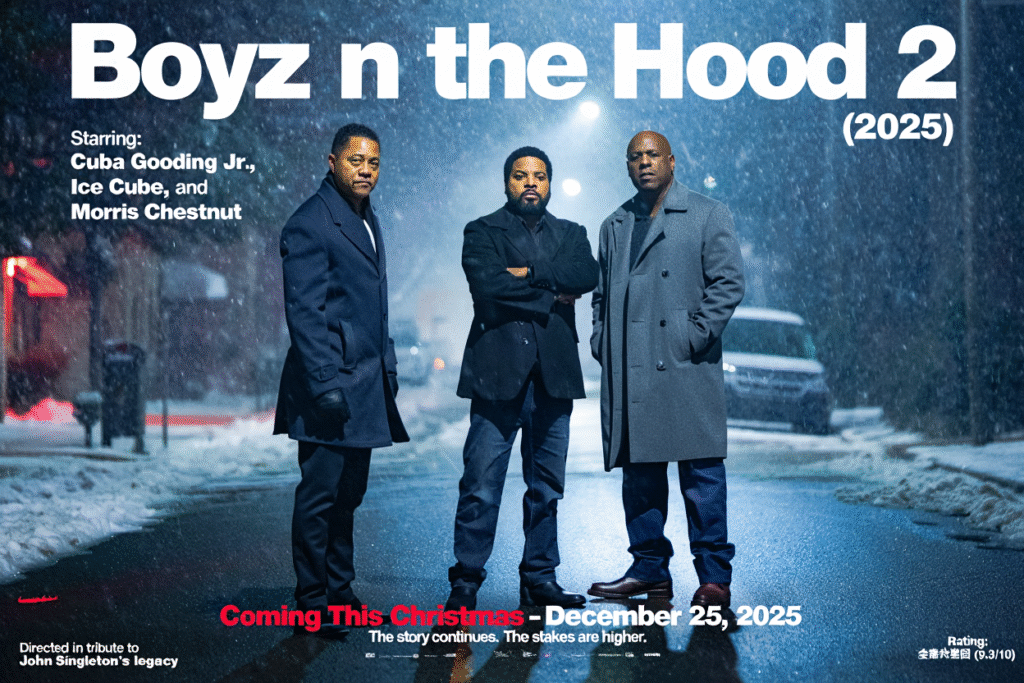
Boyz n the Hood 2 doesn’t try to outdo the original — and that’s what makes it brilliant. It doesn’t chase nostalgia. It earns it. It dares to ask what happens after the headlines fade, after the guns quiet down, after the men who once fought for respect must now teach peace to their sons.
By the time the final snowfall covers Crenshaw, the message is unmistakable: legacy isn’t what you leave behind — it’s who you lift up while you’re still here. And for these men, that means turning pain into purpose, grief into growth, and survival into love.


GIPHY App Key not set. Please check settings