From the eerie silence of forgotten halls to the slow creak of an opening door, Annabelle 4 (2025) plunges audiences into darkness with a vengeance — a return not just to fear, but to the kind of psychological terror that crawls beneath the skin and stays there. Directed with haunting precision and performed with raw conviction, this latest entry in The Conjuring Universe proves that evil never fades; it evolves.
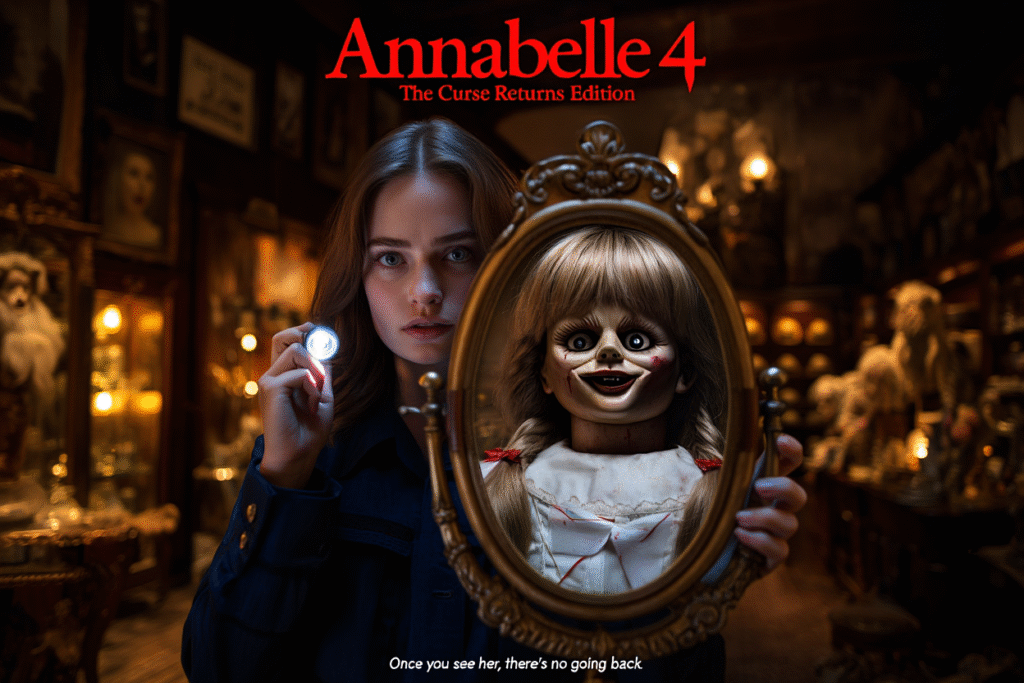
Lily James anchors the film as Evelyn Ward, a young art curator whose fascination with supernatural relics leads her to the ruins of the Warren Museum’s off-limits collection. There, in a sealed case dusted by time, lies the one object she should have never touched: the Annabelle doll. What follows is not a simple haunting — it is the slow unraveling of sanity, where every reflection, whisper, and shadow becomes part of a calculated nightmare.
Set years after the events of Annabelle Comes Home, this installment feels like a rebirth of the franchise. The setting shifts from claustrophobic suburban homes to a sprawling gothic estate-turned-museum, giving the film a sense of grandeur and decay all at once. Cinematographer Greig Fraser crafts every frame like a painting — moonlight bleeding through stained glass, candlelight trembling over cursed wood — creating a visual poetry of dread that’s as mesmerizing as it is terrifying.
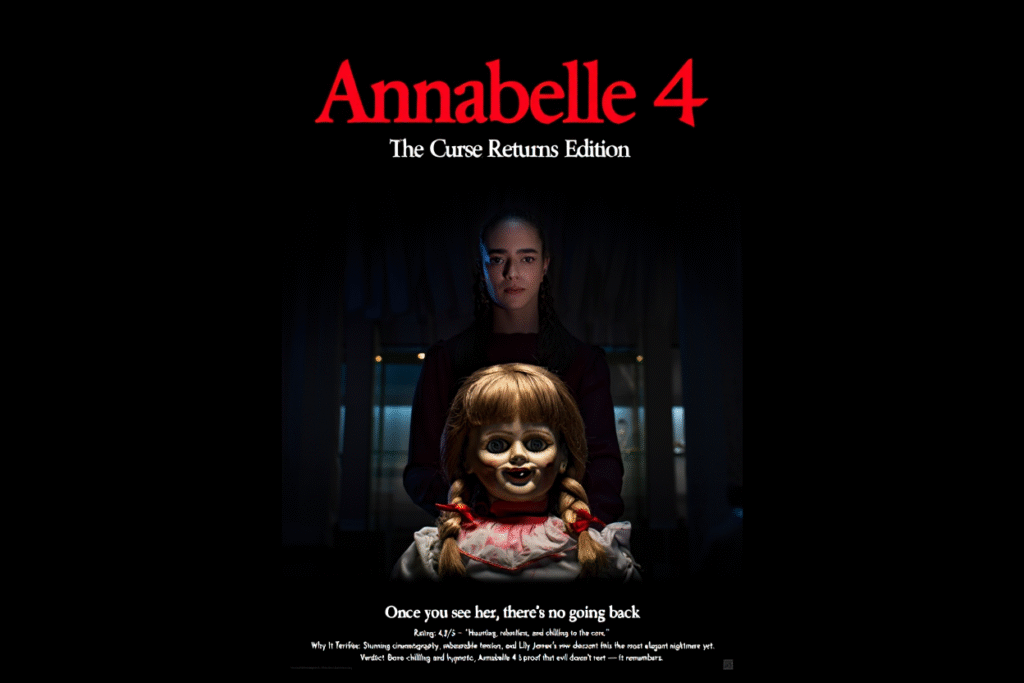
The story takes its time to burn. Evelyn’s descent begins subtly — objects move, paintings shift, voices hum beneath her breathing — but the pacing is deliberate, patient, cruel. By the time she realizes that the doll isn’t just a vessel but a living conduit for something ancient, it’s too late. What makes Annabelle 4 so suffocatingly effective is its commitment to emotional realism: fear isn’t just jump scares, it’s the erosion of reason, the weight of belief turning against you.
Lily James gives the performance of her career — fragile yet fierce, her terror feels lived-in, her grief palpable. As Evelyn, she carries the entire film on her trembling shoulders, transforming from skeptic to survivor in a way that mirrors the very essence of horror itself: the loss of control. Her chemistry with the supporting cast — including David Thewlis as a scholar haunted by his own past and Naomi Scott as her disbelieving sister — adds layers of intimacy that make every death and revelation sting twice as hard.
What sets The Curse Returns Edition apart is its expansion of lore. Through fragments of the Warren case files, eerie Latin chants, and disturbing dream sequences, the film ties the Annabelle mythos to a forgotten ritual known as “The Veil Rite,” suggesting that the doll was not merely cursed — it was created as a bridge between suffering and salvation. This mythology deepens the terror, shifting the narrative from simple possession to spiritual annihilation.
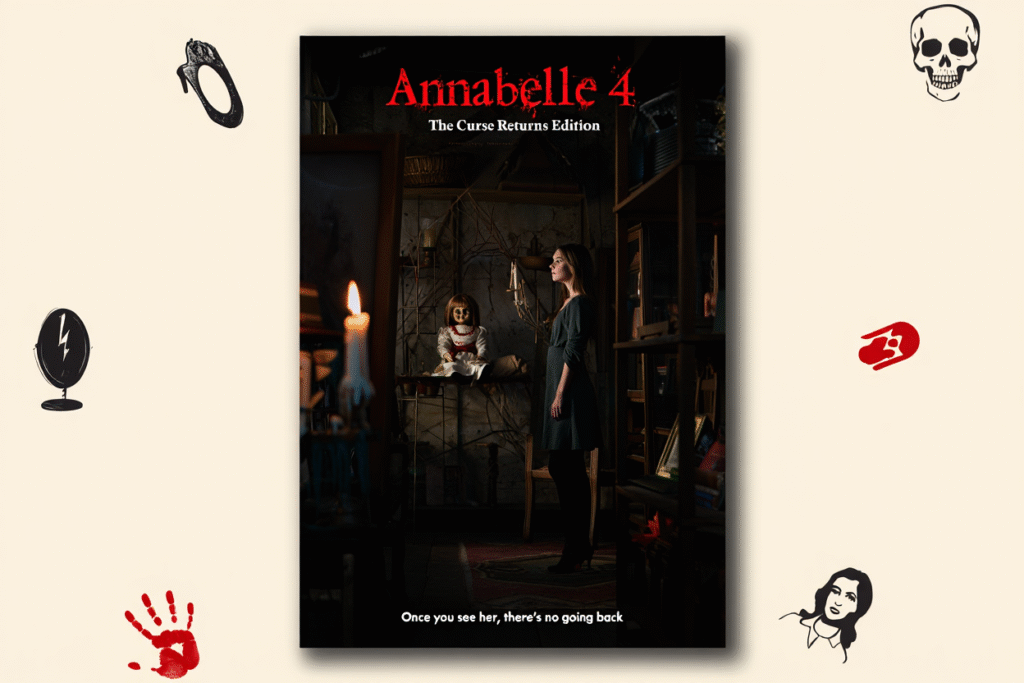
The sound design deserves its own applause — every creak, every echo, every heartbeat has a purpose. Silence becomes its own monster. In one masterful sequence, Evelyn wanders a hall of mirrors, her reflection moving half a second too late. The scene is nearly wordless, but the terror is deafening. That kind of restraint — where atmosphere kills louder than gore — is what makes Annabelle 4 stand out in a genre often addicted to excess.
Director Michael Chaves, returning after The Conjuring: The Devil Made Me Do It, perfects his craft here. His command of visual pacing, psychological layering, and narrative dread recalls the early works of James Wan while establishing a colder, more elegant signature. This is a film less about what you see and more about what follows you after the lights go out.
By the final act, the boundaries between reality and curse disintegrate completely. Evelyn’s battle against the doll isn’t just physical — it’s spiritual, emotional, existential. The climax, staged within a collapsing museum filled with possessed artifacts, delivers both spectacle and sorrow. When the final bell tolls and the mirror shatters, the audience is left breathless — not just by what’s seen, but by what’s suggested.
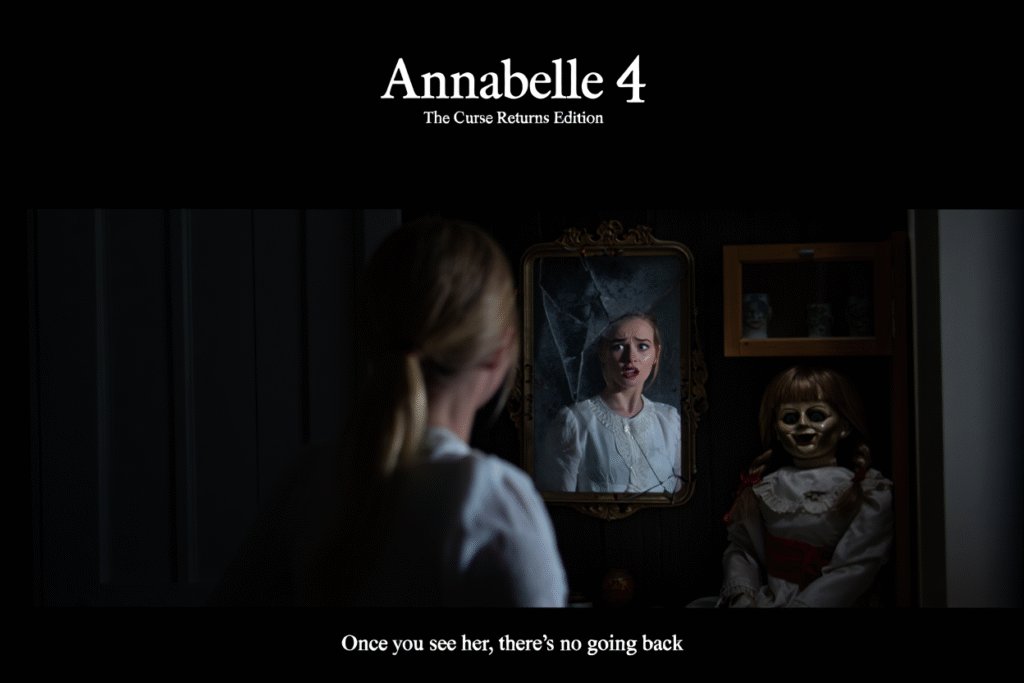
Annabelle 4 doesn’t reinvent horror. It perfects it — sharpening old fears into something elegant, intelligent, and utterly relentless. It’s not just a film you watch; it’s a curse you feel. By the end, as the screen fades to black and that familiar lullaby whispers one last time, you realize the truth: Annabelle never left. She was just waiting.


GIPHY App Key not set. Please check settings